
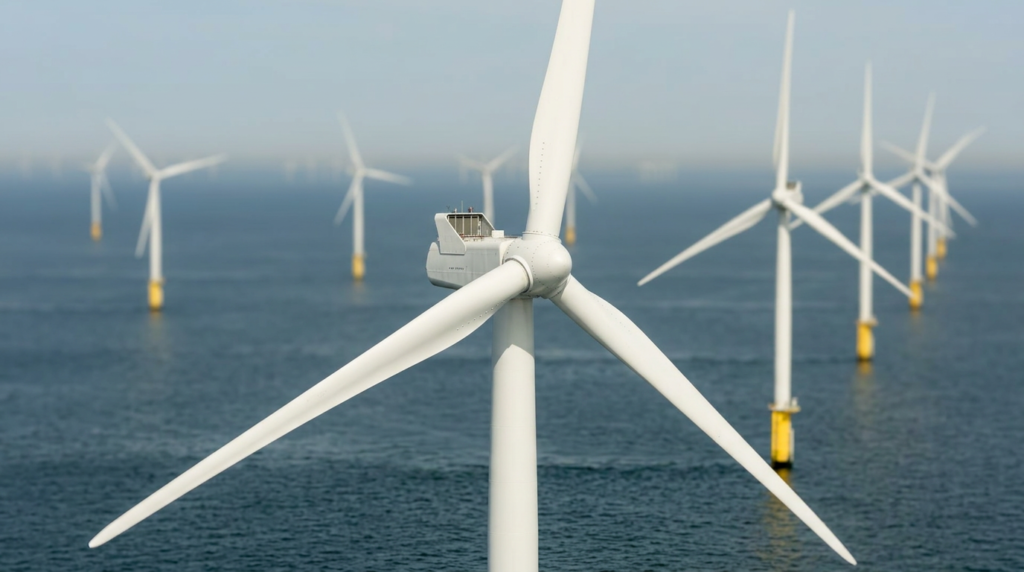
Offshore projects support the energy transition by generating clean electricity, transporting low-carbon fuels, and building the infrastructure that replaces fossil fuel dependency at scale. Wind farms, hydrogen pipelines, and cable-laying operations all depend on offshore capabilities developed over decades in oil and gas. This article walks through the main project types, the roles they require, and what the shift means for the people who work in the sector.
What types of offshore projects contribute to the energy transition?
The offshore projects that contribute most directly to the energy transition are offshore wind farms, subsea cable installations, hydrogen and ammonia transport infrastructure, carbon capture and storage (CCS) projects, and tidal and wave energy systems. Together, these project types form the backbone of the move away from fossil fuels toward cleaner, scalable energy sources.
Each project type has a different profile. Offshore wind is the most established and fastest-growing segment. Subsea cable projects connect wind farms to national grids and link countries across continents. CCS projects repurpose existing offshore infrastructure to store captured CO2 beneath the seabed. Hydrogen transport is still emerging but growing quickly, especially in Europe and the Middle East. Tidal and wave energy remain at an earlier stage but show real long-term potential.
What these projects share is complexity. They require specialist vessels, experienced crews, and coordination across multiple countries and regulatory frameworks. That is what makes workforce planning such a central challenge in the energy transition.
What skills and roles are needed for offshore energy transition projects?
Offshore energy transition projects require a combination of traditional maritime and offshore skills alongside newer technical competencies specific to renewables. The most in-demand roles include installation engineers, dynamic positioning (DP) officers, subsea engineers, cable jointers, commissioning technicians, and QHSE specialists.
On the vessel and marine side, experienced DP operators, marine engineers, and offshore installation managers (OIMs) remain highly sought after. These professionals often transition from oil and gas backgrounds, where they built the core competencies that renewable projects now depend on.
On the technical side, roles specific to wind include wind turbine technicians, foundation design engineers, and scour protection specialists. For hydrogen and CCS projects, process engineers and pipeline integrity specialists are increasingly relevant.
Safety qualifications are non-negotiable across all these roles. GWO (Global Wind Organisation) certification has become a standard requirement for anyone working on wind installations, much as BOSIET and HUET are for oil and gas. Every candidate we place is screened against the QHSE requirements and international safety standards applicable to their specific role and project type.
Why is there a skills shortage in offshore renewable energy?
The skills shortage in offshore renewable energy exists because project demand is growing faster than the workforce can be trained and certified. The pipeline of new offshore wind, hydrogen, and CCS projects is expanding at a pace that outstrips the supply of experienced professionals available to staff them.
Several factors drive this gap. First, the transition from oil and gas to renewables is not automatic. Many experienced offshore workers hold qualifications that do not directly transfer, and retraining takes time. Second, the renewables sector is competing with a recovering oil and gas industry for the same pool of DP officers, marine engineers, and offshore technicians. Third, new project types like floating offshore wind and offshore hydrogen require skills that simply do not yet exist at scale.
Geography adds another layer of difficulty. Projects are being built in locations where local labour markets cannot supply all the required expertise, which means international recruitment becomes a practical necessity rather than a preference. Exploring the full range of industries we serve gives a clearer picture of where these workforce pressures are most acute.
How does international crewing support offshore energy transition projects?
International crewing supports offshore energy transition projects by sourcing qualified professionals from global talent pools and deploying them compliantly across different countries and jurisdictions. When local labour markets cannot supply the right skills at the right time, international crewing fills that gap without compromising on safety or regulatory compliance.
This matters particularly for projects in regions where the renewables industry is still developing its local workforce. A wind farm being constructed off the coast of a country with limited offshore experience will typically need crew sourced from established maritime and offshore labour markets in Europe, Southeast Asia, or elsewhere.
International crewing also handles the complexity that comes with cross-border deployment: work permits, visa coordination, A1 certificates within the EU, local contract requirements, and payroll compliance across multiple jurisdictions. Getting this wrong is costly and can delay project start dates. Getting it right means your project starts on schedule with a fully certified, compliant crew in place.
What is the future of offshore projects in the energy transition?
The future of offshore projects in the energy transition points toward larger, more technically complex installations further from shore, combined with new project categories like floating wind, offshore green hydrogen production, and expanded CCS networks. The offshore sector will remain central to the energy transition for decades.
Floating offshore wind is the development to watch. Fixed-bottom turbines are limited to shallower waters, but floating foundations open up vast areas of deeper ocean with excellent wind resources. Countries like Norway, Portugal, and Japan are already developing commercial-scale floating wind projects.
Offshore hydrogen is another area gaining momentum. Producing green hydrogen at sea using offshore wind power and then transporting it via pipeline or carrier vessel could become a major energy supply route, particularly for industrial users in Europe and Asia.
What this means for workforce planning is straightforward: demand for skilled offshore professionals will increase, not decrease. Projects will be larger, more geographically dispersed, and more technically demanding. The organisations that can consistently source, deploy, and manage international offshore talent will have a real advantage.
How iPS Powerful People helps with offshore energy transition projects
We have been placing professionals in offshore and maritime projects since 1988, which means we understand what project managers and HR teams actually need when a start date is fixed and the right people are not yet in place. Our work in the renewables sector spans crewing for installation vessels, secondment of technical specialists, permanent recruitment, and full project staffing from survey through to commissioning.
Here is what working with us looks like in practice:
- Crewing and secondment for offshore wind, CCS, and maritime projects, covering everything from DP officers and marine engineers to wind turbine technicians and QHSE leads
- Full project staffing where we take on complete workforce management for a project, not just individual placements
- International payroll and compliance, including A1 certificates, local contract requirements, and cross-border payroll management, so you carry no administrative or legal risk
- Access to a database of over 100,000 qualified professionals and offices in the Netherlands, the Baltics, Croatia, Saudi Arabia, Mexico, Dubai, and the US, giving us reach into the labour markets your projects depend on
- Candidate screening against QHSE requirements and international safety standards as a condition of every placement
- B Corp certified, meaning our business practices meet verified standards for social and environmental performance, which aligns with the values driving the energy transition itself
If you are staffing an offshore energy project and want a partner who knows the sector, handles the complexity, and delivers on time, learn more about who we are or get in touch with our team directly.