
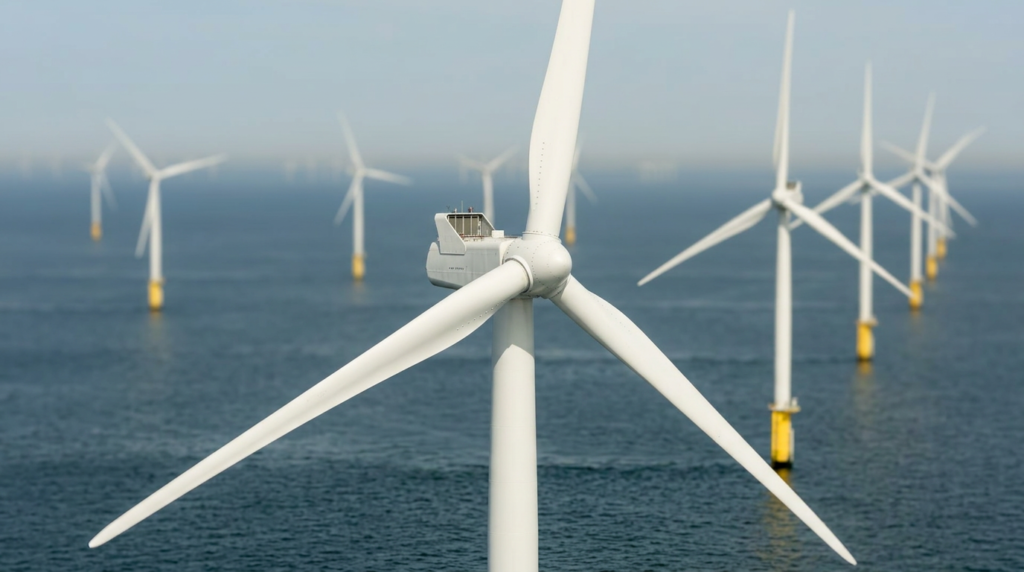
Offshore staffing agencies typically supply a wide range of roles for wind farm projects, including turbine technicians, commissioning engineers, marine crew, project managers, QHSE officers, and survey specialists. The exact mix depends on the project phase, from initial seabed surveys through installation and into long-term operations and maintenance. Below, we answer the most common questions clients ask when sourcing offshore wind personnel.
What types of technical specialists do wind farm projects need offshore?
Wind farm projects offshore require a broad spectrum of technical specialists, and the demand shifts significantly depending on the phase of the project. During construction and installation, the focus falls on mechanical and electrical engineers, turbine technicians, commissioning engineers, and structural inspectors. During operations and maintenance, the need shifts toward service technicians, condition monitoring specialists, and rotating equipment engineers.
Across all phases, project managers and planning engineers coordinate the work, while survey specialists handle geotechnical and geophysical assessments in the early stages. Electrical engineers with high-voltage experience are particularly sought after, given the complexity of offshore substations and inter-array cabling. Rope access technicians and blade inspection specialists are also in consistent demand as installed capacity grows and turbines require regular inspection and repair.
Finding qualified professionals with genuine offshore wind experience can be challenging, particularly as the sector continues to expand rapidly. Specialist offshore staffing helps project teams access verified candidates across all these disciplines without having to search the market individually for each role.
What marine and vessel crew roles are supplied for offshore wind?
Marine and vessel crew are a fundamental part of any offshore wind project. Offshore staffing agencies supply roles including dynamic positioning (DP) officers, masters, chief officers, engineers, able seamen, and crane operators for installation vessels, cable lay vessels, and crew transfer vessels (CTVs). Survey vessels also require hydrographers, geophysicists, and ROV operators.
Jack-up vessels, which are used extensively in turbine installation, need experienced marine crews familiar with the specific operational demands of working in shallow- to medium-depth waters close to turbine structures. Helicopter landing officers (HLOs) and rescue boat operators are also regularly required to meet offshore safety standards.
The availability of DP-certified officers and experienced jack-up crew can be a bottleneck on tight project timelines, making early engagement with a crewing partner a practical step for project planners.
What health, safety, and compliance roles are required on wind farm sites?
Every offshore wind project requires dedicated QHSE personnel. At a minimum, this includes a QHSE manager or offshore safety officer, but larger projects will also require safety supervisors, permit-to-work coordinators, and environmental compliance officers. These roles are not optional extras; they are regulatory requirements in most jurisdictions and a condition of operating offshore.
Medics with offshore medical training (such as BOSIET or FOET certification) are required on most installations and vessels. Lifting and rigging supervisors with relevant offshore certifications are needed wherever heavy lifts take place, which is virtually every phase of turbine installation.
We screen all candidates against QHSE requirements and international safety standards before any placement. This is a non-negotiable part of our process, because in a safety-critical environment like offshore wind, a gap in qualifications carries real consequences.
How does an offshore staffing agency source wind farm candidates internationally?
Offshore staffing agencies source wind farm candidates through a combination of their existing candidate databases, active headhunting, referral networks, and regional offices in key talent markets. The most effective agencies maintain a continuously updated pool of pre-screened professionals rather than starting a search from scratch for each vacancy.
Geography matters significantly in offshore wind recruitment. Strong talent pools exist in the Netherlands, the UK, Denmark, Germany, and increasingly in the Baltic states and Croatia, where maritime and engineering traditions run deep. Sourcing from these regions requires knowledge of local labour markets, language capability, and an understanding of local certification standards.
We have built our network over more than 35 years of international recruitment, with offices and representatives across Europe, the Middle East, and beyond. Our database holds over 100,000 qualified professionals, and our local presence in markets like the Baltic states and Croatia means we understand both the candidates and the compliance landscape in those regions. That local knowledge makes a measurable difference when you need to fill a specialist role quickly.
What’s the difference between crewing, secondment, and recruitment for wind farm projects?
These three models serve different needs, and choosing the right one affects both cost and operational control. Here is a straightforward breakdown:
- Crewing means the staffing agency employs the workers directly and supplies them to your vessel or installation on a rotational basis. The agency manages employment contracts, payroll, and compliance. This is common for marine crew and offshore technicians on long-running operations.
- Secondment means a professional is placed with your organisation for a defined period, typically working under your supervision and following your operational procedures, while remaining employed by the agency. This suits project-specific roles where you need the worker to integrate closely with your team.
- Recruitment means the agency finds and places a candidate who then becomes your direct employee. This is suited to permanent or long-term roles where you want full employment control.
For offshore wind projects, the right model often depends on project duration, the nature of the role, and your preference for managing employment risk. Many clients use a combination of all three across different roles within the same project.
Can an offshore staffing agency handle payroll for workers across multiple countries?
Yes, a specialist offshore staffing agency with international payroll capability can manage payroll for workers employed across multiple countries. This includes handling local tax obligations, social security contributions, employment contracts in compliance with local law, and, where relevant, A1 certificates for EU workers moving between member states.
Cross-border payroll is genuinely complex, particularly in offshore wind where a single project might involve crew from five or six different nationalities working on a vessel registered in a seventh country. Getting this wrong creates legal exposure for the client and uncertainty for the worker.
We take candidates onto our own payroll for international assignments, managing full compliance including A1 certificates within the EU and contract structures suited to each deployment scenario. Our approach is open-book, meaning you have full visibility into costs with no hidden risk. This is particularly valuable for project operators who want a single payroll partner rather than managing multiple local arrangements themselves.
How iPS Powerful People helps with offshore wind staffing
We work with wind farm operators, installation contractors, and vessel operators across the full project lifecycle, from early survey phases through to long-term operations and maintenance. Our services cover every layer of offshore wind staffing:
- Crewing for installation vessels, CTVs, and offshore platforms, including DP officers, marine engineers, and deck crew
- Technical staffing for turbine technicians, commissioning engineers, QHSE officers, and project managers
- Full project manning, where we take responsibility for resourcing an entire project team rather than placing individual roles
- Cross-border payroll with full compliance, A1 certificates, and open-book administration, so you carry no employment risk
- Secondment and permanent recruitment for roles at every level, from blue-collar to senior management
We are B Corp certified, which reflects our commitment to responsible employment practices and fair treatment of the professionals we place, something that matters increasingly to project developers with their own sustainability obligations.
Whether you need a single specialist at short notice or a complete offshore project workforce, we can help you put the right people in place. Get in touch with our team to discuss your project requirements, and we will come back to you with a practical plan. You can also learn more about who we are and how we work before reaching out.