
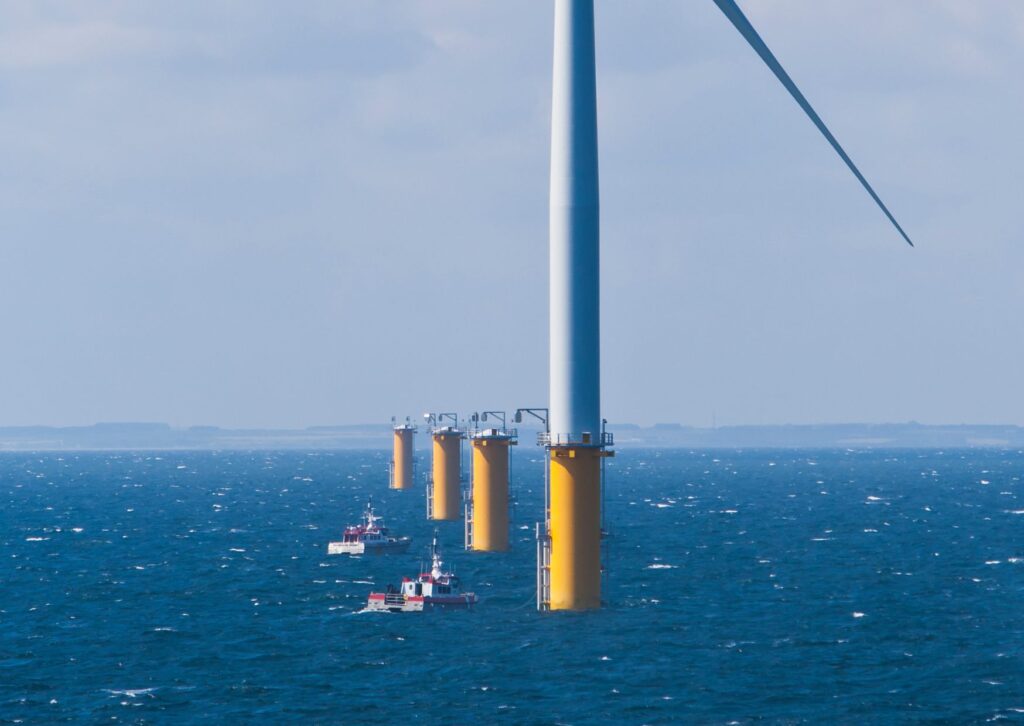
The construction of offshore wind farms can negatively affect marine species due to noise pollution. This noise can cause collisions, disrupt habitats and feeding grounds, and lead to disorientation. However, technological advancements have helped reduce underwater noise during construction, thereby protecting marine life.
Here are four key innovations used to minimize noise pollution during the installation of offshore wind turbines:
- Big Bubble Curtain (BBC): This technology involves placing a perforated ring or hose on the seabed around the construction site. When compressed air is pumped through, it creates bubbles that rise to the surface, forming a “Bubble Curtain” that reduces underwater noise.
- Hydro Sound Damper (HSD): The HSD system uses nets filled with sound-dampening materials, deployed around the pile down to the seabed. It specifically reduces noise from pile driving during turbine foundation installation.
- Noise Mitigation Screen (IHC-NMS): This innovation features a cylindrical sleeve that acts as a barrier around the pile, reducing noise during the installation of offshore wind farms.
- Cofferdam: A temporary enclosure that isolates the construction area from surrounding water, the Cofferdam contains and reflects sound energy, protecting marine species.
As offshore wind energy continues to expand, these technologies will play a crucial role in ensuring that the transition to sustainable energy is both effective and environmentally responsible. By implementing these innovations, offshore wind farms can be built with minimal harm to marine ecosystems.